

The Proof-of-Stake (PoS) consensus mechanism is one of the most robust pillars of economic security in the crypto industry. Users contribute to network security by locking tokens to become validators. Liquid Staking Tokens (LSTs), however, represent an innovation that brings staking yields into the decentralized finance (DeFi). These tokens can be traded, used as collateral, or leveraged in yield strategies across protocols and decentralized exchanges (DEXs), unlocking the liquidity of staked assets and maximizing their capital efficiency.
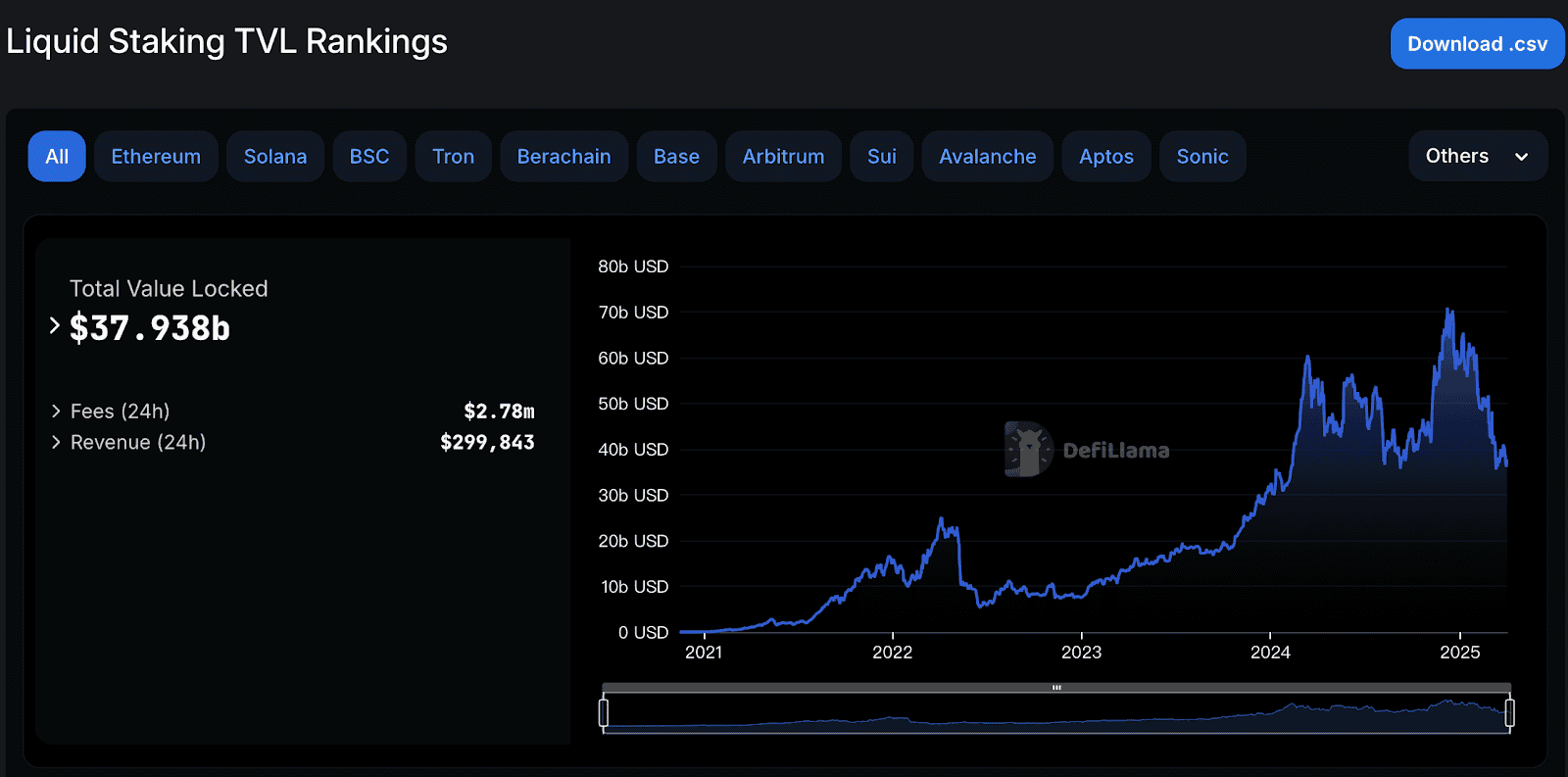
Currently, LSTs dominate the DeFi landscape with a total value locked (TVL) of approximately $38 billion.
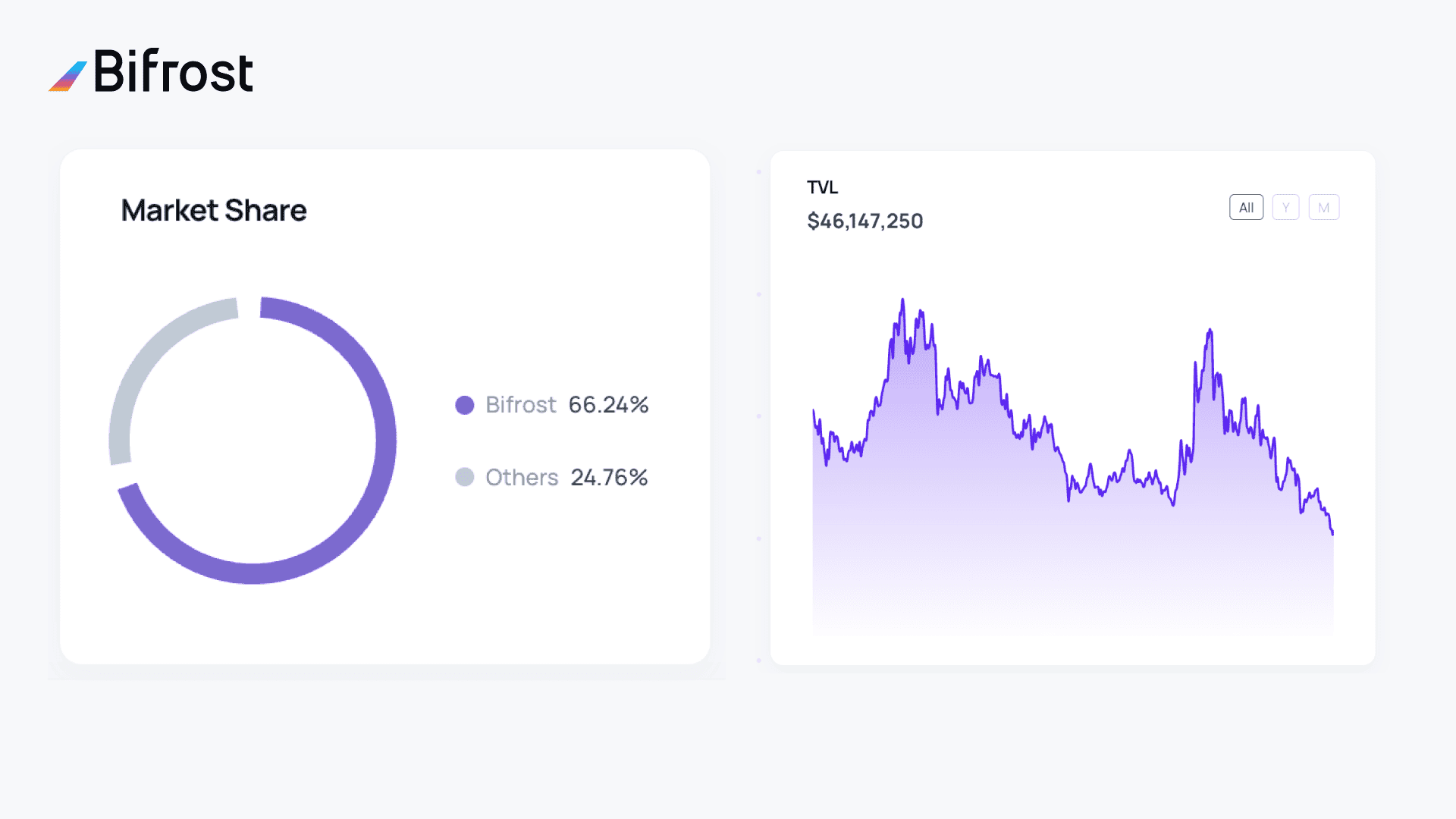
Amidst growing interest in advanced DeFi strategies, Bifrost distinguishes itself from single-chain LST protocols by building omnichain liquid staking. With a solid foundation already in place, Bifrost has surpassed $50M in TVL and now dominates over 60% of liquid staking market on Polkadot.
At the heart of Bifrost’s design is the vToken mechanism. vTokens are LSTs minted by the Bifrost protocol. Users can stake their PoS tokens (e.g., DOT) and receive vTokens in return—similar to how staking ETH in Lido yields stETH. Holding a vToken is equivalent to holding a staked token: users earn staking rewards while retaining full liquidity.
Bifrost has launched 9 vTokens, including:
As of now, vDOT offers an APY of around 11.3%.
LP Farming
Collateralized Lending
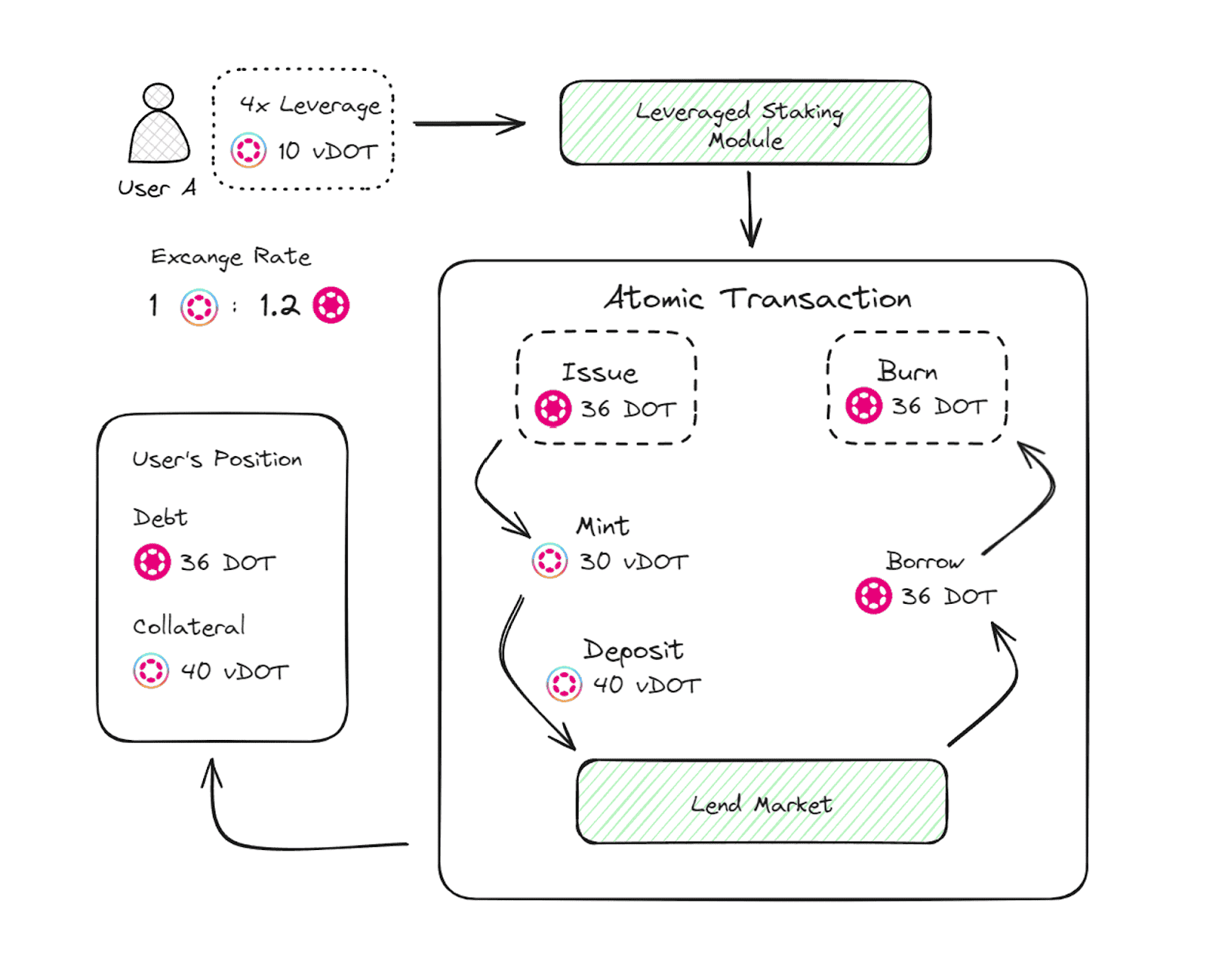
Loop Staking (Leveraged Staking)
Decoupling Risks: To counter potential price deviation between vTokens and their underlying assets, Bifrost maintains ample liquidity pools (over 170K DOT and 154K vDOT valued over $3 million), employing stable pool market-making mechanisms similar to Curve Protocol. Liquidity reserves on Stellaswap and Hydration further ensure seamless token conversions.
Custodial Risks: Bifrost is entirely non-custodial. Additionally, the protocol operates an Insurance Vault funded by BNC tokens, designed to cover slashing losses without impacting user rewards.
While Bifrost has proactively addressed typical risks associated with LST protocols, users should remain mindful of extreme black swan events, potential smart contract exploits, and risks associated with liquidity withdrawal from official pools.
Bifrost has maintained a stable revenue stream, with total protocol revenues exceeding $10 million. Historically, revenues were allocated to the treasury and used to incentivize vToken minting, liquidity provision, and channel development. While this model supported growth, it did not directly benefit BNC holders.
Recently, Bifrost announced a major upgrade: Tokenomics 2.0.
This new model introduces a profit-sharing mechanism and a new token, bbBNC (Buy-Back BNC), as a medium for distributing protocol profits. Under this model:
This model strengthens BNC’s value capture, boosting its market capitalization and creating a positive growth flywheel:
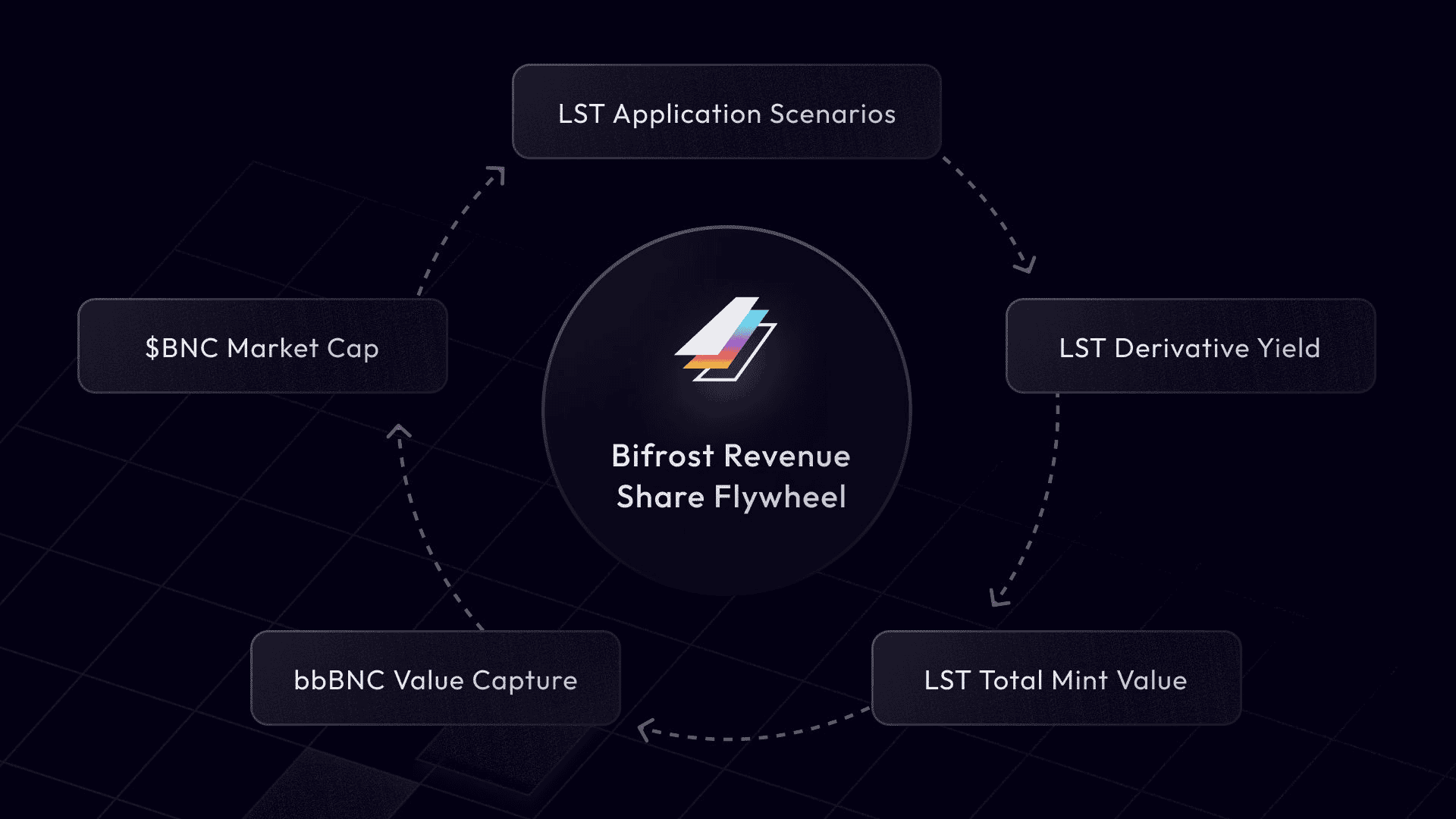
bbBNC thus becomes the engine that aligns Bifrost’s protocol growth with community incentives, empowering stakeholders to contribute meaningfully to Bifrost’s ecosystem development.


